Building Smarter, Cross-Functional Partnerships in HealthTech
The biggest barrier to AI success isn’t tech, it’s people. Learn how marketers and data scientists can co-create smarter solutions.
☕ A Coffee Corner Moment
Last quarter, I sat in a launch planning meeting where someone asked: “How can we use AI here?”
It’s a familiar question. But here’s the twist: the most successful projects I’ve seen didn’t start with “How can we use AI?” They started with: “What’s our biggest strategic challenge and could AI help solve it?”
That shift in framing changes everything. It moves AI from being a shiny tool to being a practical partner. And it requires smarter, cross-functional collaboration.
Start with the Problem, Not the Tech
In pharma, we love our acronyms: RWE, EMA, CRM. Add AI to the mix, and suddenly everyone wants to “use it.”
But AI isn’t the starting point. The problem is.
Clinical trials: Can we identify participants faster and more accurately?
Stakeholder engagement: Can we personalize outreach without overwhelming physicians?
Market access: Can we anticipate reimbursement hurdles before they derail adoption?
When the business need leads, AI becomes a powerful enabler. When tech leads, we risk building elegant solutions nobody uses.
Learn to Speak Each Other’s Language
Here’s what I’ve learned after three AI implementation projects: marketers don’t need to become coders, but they do need to understand the basics of data science.
And data scientists? They don’t need to become marketers, but they do need to grasp patient journeys, regulatory constraints, and market realities.
Shared language builds trust. Without it, conversations turn into translation exercises. With it, they become collaboration.
Build Feedback Loops — Not Hand-Offs
Too many pharma projects still run like relay races: strategy hands requirements to data teams, waits for results, and hopes for alignment.
But the best AI solutions are iterative. Strategy informs model design. Real-world feedback refines it. Teams co-create, test, and adapt together.
Think of it less as a baton pass, more as a feedback loop. Loops build resilience. They allow solutions to evolve with shifting market dynamics.
Breaking Down Silos
If we want AI to deliver real value in pharma, we need to break down silos. That means:
Early alignment between commercial, medical, and data teams
Joint ownership of outcomes, not just deliverables
Transparency in assumptions, limitations, and risks
The payoff? Solutions that are technically sound and strategically relevant.
Real-World Pharma Scenarios
Trial recruitment: AI can identify eligible participants faster, but only if data teams understand inclusion criteria and marketers grasp patient access realities.
HCP engagement: Personalization works when algorithms know what matters to physicians — which requires input from medical affairs and field teams.
Market access: Predictive analytics can forecast reimbursement hurdles, but only if strategy teams explain the nuances of local healthcare systems.
Each example shows the same truth: technology alone doesn’t solve problems. Partnerships do.
My Playbook for Smarter Partnerships
Here’s what I’ve seen work across launches and digital transformation projects:
Start conversations with challenges. Frame discussions around strategic problems, not tools.
Create shared learning moments. Host workshops where marketers learn data basics and data teams learn patient pathways.
Design iterative processes. Build feedback loops into every project.
Celebrate co-creation. Recognize contributions across functions, not just final outputs.
Measure impact together. Define success metrics that matter to all stakeholders — patient access, HCP confidence, adoption rates.
Redefining Success
Success isn’t about deploying AI models. It’s about whether those models solve real problems:
Do patients gain faster access to therapies?
Do healthcare professionals feel supported in their practice?
Do strategies adapt to local realities instead of forcing one-size-fits-all solutions?
When partnerships align around these outcomes, AI becomes more than technology. It becomes transformation.
The Broader Perspective
Pharma is full of brilliant minds — strategists, scientists, marketers, data experts. But brilliance in silos rarely changes lives.
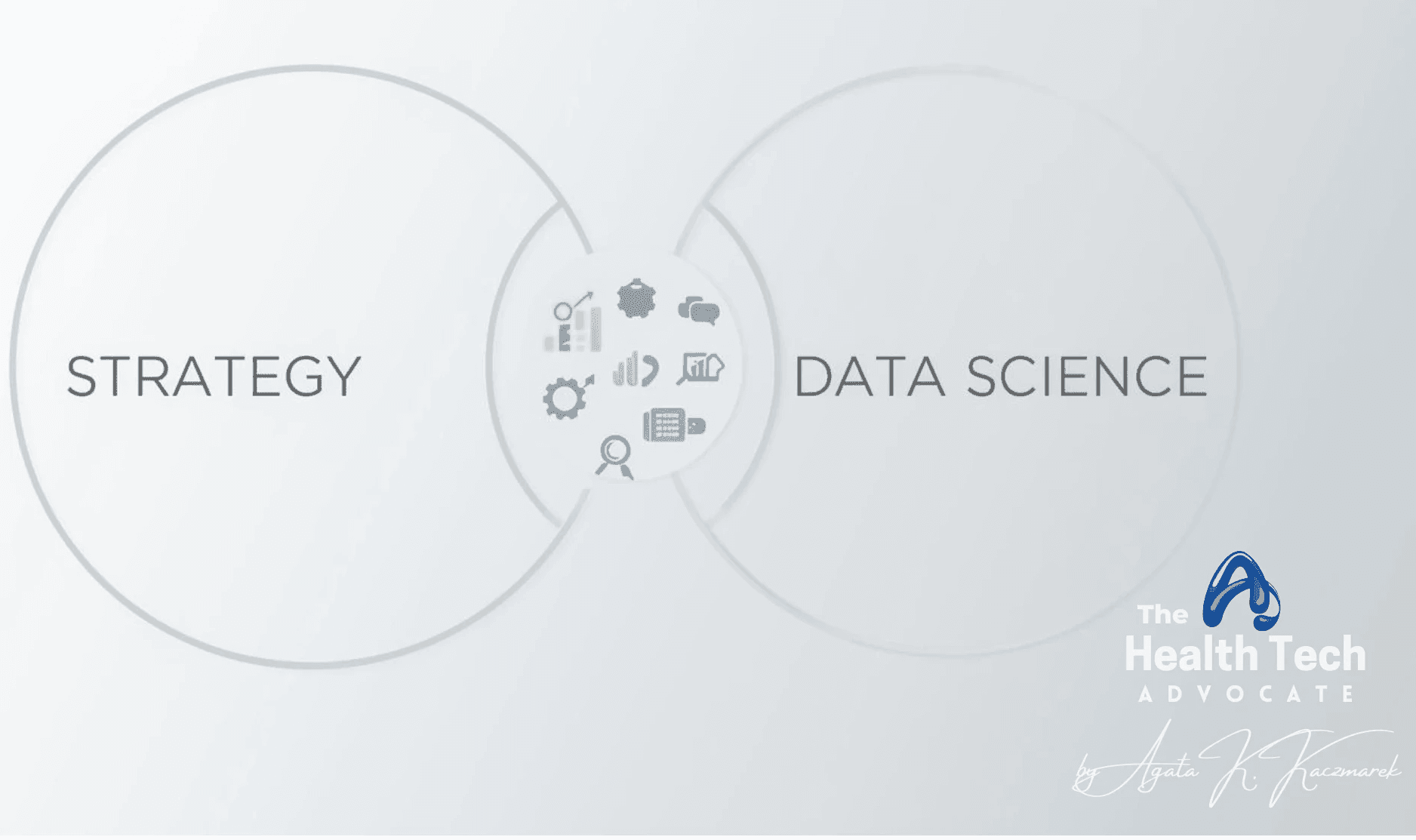
The future belongs to teams that build bridges: between strategy and data, between global frameworks and local realities, between science and patient care.
AI is not the destination. It’s the vehicle. Partnerships are the road.
Monday Morning Test ☕
Here’s what you can try this week:
In your next meeting, reframe the question from “How can we use AI?” to “What’s our biggest challenge and could AI help?”
Invite a data scientist to join a commercial strategy discussion.
Map one patient journey together, across functions, and ask: Where could AI help here?
Because smarter partnerships don’t start with technology. They start with conversations.
☕ A Coffee Corner Moment
Last quarter, I sat in a launch planning meeting where someone asked: “How can we use AI here?”
It’s a familiar question. But here’s the twist: the most successful projects I’ve seen didn’t start with “How can we use AI?” They started with: “What’s our biggest strategic challenge and could AI help solve it?”
That shift in framing changes everything. It moves AI from being a shiny tool to being a practical partner. And it requires smarter, cross-functional collaboration.
Start with the Problem, Not the Tech
In pharma, we love our acronyms: RWE, EMA, CRM. Add AI to the mix, and suddenly everyone wants to “use it.”
But AI isn’t the starting point. The problem is.
Clinical trials: Can we identify participants faster and more accurately?
Stakeholder engagement: Can we personalize outreach without overwhelming physicians?
Market access: Can we anticipate reimbursement hurdles before they derail adoption?
When the business need leads, AI becomes a powerful enabler. When tech leads, we risk building elegant solutions nobody uses.
Learn to Speak Each Other’s Language
Here’s what I’ve learned after three AI implementation projects: marketers don’t need to become coders, but they do need to understand the basics of data science.
And data scientists? They don’t need to become marketers, but they do need to grasp patient journeys, regulatory constraints, and market realities.
Shared language builds trust. Without it, conversations turn into translation exercises. With it, they become collaboration.
Build Feedback Loops — Not Hand-Offs
Too many pharma projects still run like relay races: strategy hands requirements to data teams, waits for results, and hopes for alignment.
But the best AI solutions are iterative. Strategy informs model design. Real-world feedback refines it. Teams co-create, test, and adapt together.
Think of it less as a baton pass, more as a feedback loop. Loops build resilience. They allow solutions to evolve with shifting market dynamics.
Breaking Down Silos
If we want AI to deliver real value in pharma, we need to break down silos. That means:
Early alignment between commercial, medical, and data teams
Joint ownership of outcomes, not just deliverables
Transparency in assumptions, limitations, and risks
The payoff? Solutions that are technically sound and strategically relevant.
Real-World Pharma Scenarios
Trial recruitment: AI can identify eligible participants faster, but only if data teams understand inclusion criteria and marketers grasp patient access realities.
HCP engagement: Personalization works when algorithms know what matters to physicians — which requires input from medical affairs and field teams.
Market access: Predictive analytics can forecast reimbursement hurdles, but only if strategy teams explain the nuances of local healthcare systems.
Each example shows the same truth: technology alone doesn’t solve problems. Partnerships do.
My Playbook for Smarter Partnerships
Here’s what I’ve seen work across launches and digital transformation projects:
Start conversations with challenges. Frame discussions around strategic problems, not tools.
Create shared learning moments. Host workshops where marketers learn data basics and data teams learn patient pathways.
Design iterative processes. Build feedback loops into every project.
Celebrate co-creation. Recognize contributions across functions, not just final outputs.
Measure impact together. Define success metrics that matter to all stakeholders — patient access, HCP confidence, adoption rates.
Redefining Success
Success isn’t about deploying AI models. It’s about whether those models solve real problems:
Do patients gain faster access to therapies?
Do healthcare professionals feel supported in their practice?
Do strategies adapt to local realities instead of forcing one-size-fits-all solutions?
When partnerships align around these outcomes, AI becomes more than technology. It becomes transformation.
The Broader Perspective
Pharma is full of brilliant minds — strategists, scientists, marketers, data experts. But brilliance in silos rarely changes lives.
The future belongs to teams that build bridges: between strategy and data, between global frameworks and local realities, between science and patient care.
AI is not the destination. It’s the vehicle. Partnerships are the road.
Monday Morning Test ☕
Here’s what you can try this week:
In your next meeting, reframe the question from “How can we use AI?” to “What’s our biggest challenge and could AI help?”
Invite a data scientist to join a commercial strategy discussion.
Map one patient journey together, across functions, and ask: Where could AI help here?
Because smarter partnerships don’t start with technology. They start with conversations.
☕ A Coffee Corner Moment
Last quarter, I sat in a launch planning meeting where someone asked: “How can we use AI here?”
It’s a familiar question. But here’s the twist: the most successful projects I’ve seen didn’t start with “How can we use AI?” They started with: “What’s our biggest strategic challenge and could AI help solve it?”
That shift in framing changes everything. It moves AI from being a shiny tool to being a practical partner. And it requires smarter, cross-functional collaboration.
Start with the Problem, Not the Tech
In pharma, we love our acronyms: RWE, EMA, CRM. Add AI to the mix, and suddenly everyone wants to “use it.”
But AI isn’t the starting point. The problem is.
Clinical trials: Can we identify participants faster and more accurately?
Stakeholder engagement: Can we personalize outreach without overwhelming physicians?
Market access: Can we anticipate reimbursement hurdles before they derail adoption?
When the business need leads, AI becomes a powerful enabler. When tech leads, we risk building elegant solutions nobody uses.
Learn to Speak Each Other’s Language
Here’s what I’ve learned after three AI implementation projects: marketers don’t need to become coders, but they do need to understand the basics of data science.
And data scientists? They don’t need to become marketers, but they do need to grasp patient journeys, regulatory constraints, and market realities.
Shared language builds trust. Without it, conversations turn into translation exercises. With it, they become collaboration.
Build Feedback Loops — Not Hand-Offs
Too many pharma projects still run like relay races: strategy hands requirements to data teams, waits for results, and hopes for alignment.
But the best AI solutions are iterative. Strategy informs model design. Real-world feedback refines it. Teams co-create, test, and adapt together.
Think of it less as a baton pass, more as a feedback loop. Loops build resilience. They allow solutions to evolve with shifting market dynamics.
Breaking Down Silos
If we want AI to deliver real value in pharma, we need to break down silos. That means:
Early alignment between commercial, medical, and data teams
Joint ownership of outcomes, not just deliverables
Transparency in assumptions, limitations, and risks
The payoff? Solutions that are technically sound and strategically relevant.
Real-World Pharma Scenarios
Trial recruitment: AI can identify eligible participants faster, but only if data teams understand inclusion criteria and marketers grasp patient access realities.
HCP engagement: Personalization works when algorithms know what matters to physicians — which requires input from medical affairs and field teams.
Market access: Predictive analytics can forecast reimbursement hurdles, but only if strategy teams explain the nuances of local healthcare systems.
Each example shows the same truth: technology alone doesn’t solve problems. Partnerships do.
My Playbook for Smarter Partnerships
Here’s what I’ve seen work across launches and digital transformation projects:
Start conversations with challenges. Frame discussions around strategic problems, not tools.
Create shared learning moments. Host workshops where marketers learn data basics and data teams learn patient pathways.
Design iterative processes. Build feedback loops into every project.
Celebrate co-creation. Recognize contributions across functions, not just final outputs.
Measure impact together. Define success metrics that matter to all stakeholders — patient access, HCP confidence, adoption rates.
Redefining Success
Success isn’t about deploying AI models. It’s about whether those models solve real problems:
Do patients gain faster access to therapies?
Do healthcare professionals feel supported in their practice?
Do strategies adapt to local realities instead of forcing one-size-fits-all solutions?
When partnerships align around these outcomes, AI becomes more than technology. It becomes transformation.
The Broader Perspective
Pharma is full of brilliant minds — strategists, scientists, marketers, data experts. But brilliance in silos rarely changes lives.
The future belongs to teams that build bridges: between strategy and data, between global frameworks and local realities, between science and patient care.
AI is not the destination. It’s the vehicle. Partnerships are the road.
Monday Morning Test ☕
Here’s what you can try this week:
In your next meeting, reframe the question from “How can we use AI?” to “What’s our biggest challenge and could AI help?”
Invite a data scientist to join a commercial strategy discussion.
Map one patient journey together, across functions, and ask: Where could AI help here?
Because smarter partnerships don’t start with technology. They start with conversations.
Let's Decode the Future of Medicine with Technology
- Together
Let's Decode the Future of Medicine with Technology
- Together
No spam, unsubscribe anytime.
Let's Decode the Future of Medicine with Technology
- Together
No spam, unsubscribe anytime.